Split City
Such drama
Bands come and go, and musicians drift from band to band. Split City celebrates the constant mixing, evolution and surprising combinations with easy-to-read, researched diagrams. Whether you just want to check if that song was Genesis or Phil Collins solo, or you're trying to settle a bet over whether that was Jefferson Airplane or Jefferson Starship, we're here to help.
Newest entries
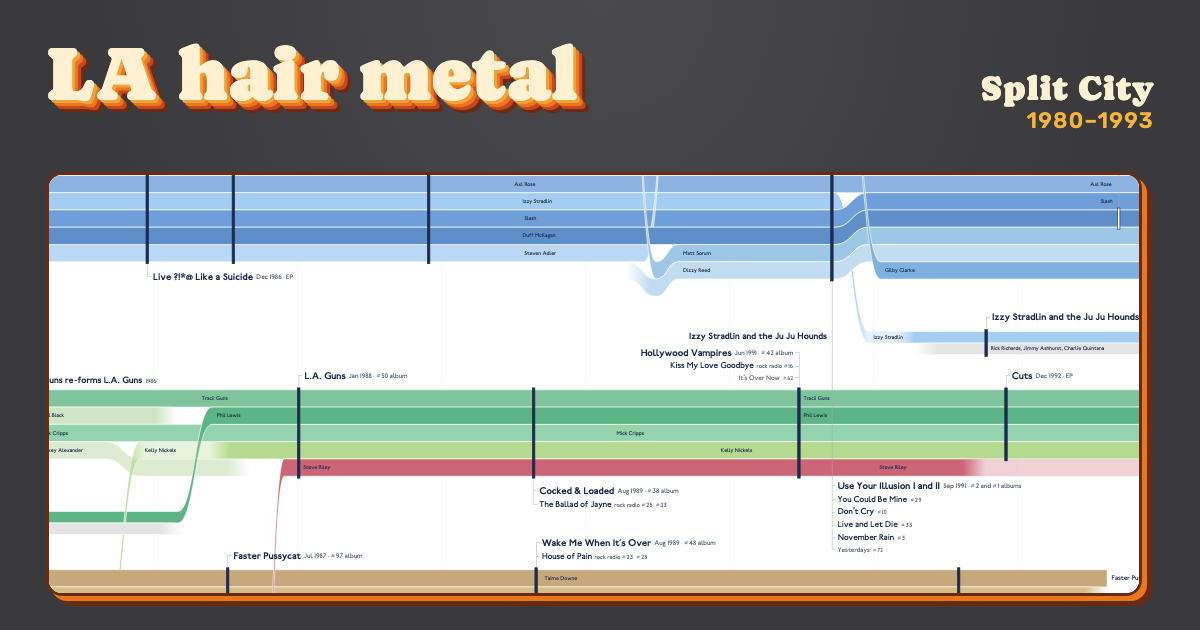 LA hair metal 1980–1993
Los Angeles's hair metal bands drew on the same few dozen players around the Sunset Strip clubs. Nikki Sixx left London to start Mötley Crüe in 1981, Blackie Lawless took his place there before forming W.A.S.P., and Guns N' Roses began in 1985 as a merger of Hollywood Rose and L.A. Guns. Players moved between Ratt, Dokken, Rough Cutt and Ozzy Osbourne's band, and Quiet Riot's drummer Frankie Banali also played in W.A.S.P. and Faster Pussycat.
See the map
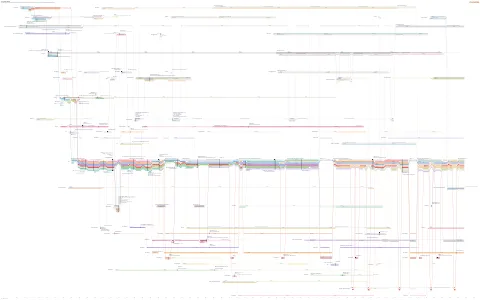 Toto 1970–2026
Toto was built in the Los Angeles studios: David Paich, Jeff Porcaro and David Hungate had played behind Sonny & Cher, Steely Dan and Boz Scaggs before they brought in Steve Lukather, Steve Porcaro and Bobby Kimball, and "Hold the Line" made them a hit in 1978.
 Asia 1963–2026
Asia formed in London in 1981 from four veterans of 1970s progressive rock: John Wetton of King Crimson and U.K., Steve Howe and Geoff Downes from Yes, and Carl Palmer of Emerson, Lake & Palmer.
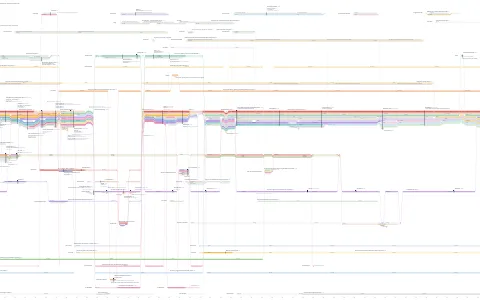 The Doobie Brothers 1966–2026
Tom Johnston and John Hartman met through Moby Grape's Skip Spence, played San Jose clubs as Pud, and became the Doobie Brothers with Patrick Simmons in 1970.